
- English
- Español
- Português
- русский
- Français
- 日本語
- Deutsch
- tiếng Việt
- Italiano
- Nederlands
- ภาษาไทย
- Polski
- 한국어
- Svenska
- magyar
- Malay
- বাংলা ভাষার
- Dansk
- Suomi
- हिन्दी
- Pilipino
- Türkçe
- Gaeilge
- العربية
- Indonesia
- Norsk
- تمل
- český
- ελληνικά
- український
- Javanese
- فارسی
- தமிழ்
- తెలుగు
- नेपाली
- Burmese
- български
- ລາວ
- Latine
- Қазақша
- Euskal
- Azərbaycan
- Slovenský jazyk
- Македонски
- Lietuvos
- Eesti Keel
- Română
- Slovenski
- मराठी
- Srpski језик
How DC Circuit Breakers For Solar Panels Improve System Safety
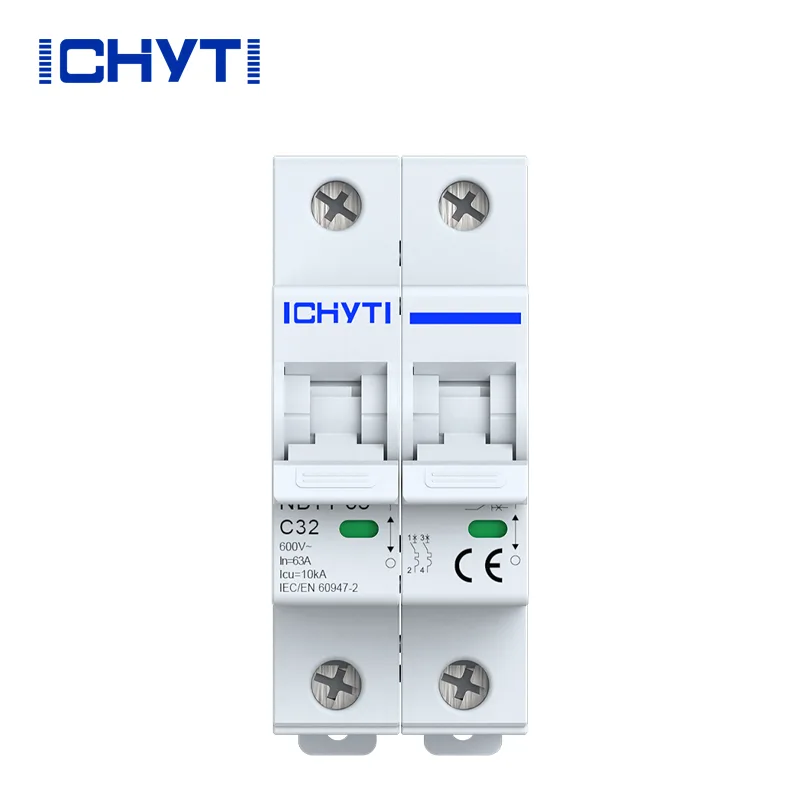
As solar power installations continue to expand across residential, commercial, and utility-scale applications, electrical protection has become an important part of photovoltaic system design. Direct current circuits operate under different electrical conditions from alternating current circuits, creating specific requirements for fault interruption and equipment selection. DC Circuit Breakers For Solar Panels play an important role in protecting photovoltaic circuits against overcurrent conditions and helping maintain the operational safety of solar power systems.
Understanding DC Protection in Photovoltaic Systems
Solar panels generate direct current electricity, which flows through cables, combiner boxes, protective devices, and inverters before being converted into alternating current for many conventional electrical applications. Unlike alternating current, direct current does not naturally pass through zero during each cycle. This characteristic can make an electrical arc more difficult to extinguish when a circuit is interrupted.
For this reason, DC protection devices must be specifically designed and rated for direct current applications. Their electrical ratings, contact structures, arc-extinguishing mechanisms, and interruption capabilities are important factors in determining whether they can safely operate within a photovoltaic installation.
How Circuit Breakers Help Prevent Electrical Hazards
One of the primary functions of a DC circuit breaker is to interrupt excessive current when a qualifying overcurrent condition occurs. Such conditions may result from wiring faults, equipment failures, or other abnormal electrical events. If excessive current continues to flow, conductors and connected components may experience overheating, insulation damage, or other forms of electrical stress.
DC Circuit Breakers For Solar Panels help isolate affected sections of a photovoltaic circuit when their protection thresholds and operating characteristics are properly matched to the installation. This isolation can reduce the duration of certain electrical faults and limit their potential impact on connected equipment.
However, circuit breakers do not address every possible solar installation hazard. For example, certain series arc faults may not produce enough current to activate conventional overcurrent protection. Specialized arc-fault detection and interruption equipment may therefore be required under applicable electrical codes and system designs.
Important Factors in Selecting DC Circuit Breakers
Selecting a suitable protective device involves more than checking its nominal current rating. Several electrical and installation parameters influence its performance.
1. Rated Operating Voltage
The rated DC voltage must be appropriate for the maximum voltage that the photovoltaic circuit can reach under relevant operating and environmental conditions. Solar module open-circuit voltage increases as cell temperature decreases, so designers need to consider the corrected maximum string voltage rather than relying only on the nominal system voltage.
2. Rated Current and Overcurrent Coordination
The current rating must correspond to the circuit design, conductor ampacity, module characteristics, and applicable protection requirements. Coordination between upstream and downstream protective devices is also important. Proper coordination helps limit unnecessary disconnection of unaffected circuit sections during a fault.
3. Breaking Capacity
Breaking capacity describes the maximum fault current a protective device is designed to interrupt under specified conditions. The selected device must have an adequate DC interrupting rating for the prospective fault current at its installation point. This requirement is particularly relevant in systems with multiple parallel photovoltaic strings or additional energy sources.
4. Environmental and Installation Conditions
Solar electrical equipment may operate in outdoor enclosures exposed to temperature fluctuations, humidity, dust, and ultraviolet radiation. Ambient temperature, enclosure ventilation, terminal connections, and installation orientation can influence equipment performance. Appropriate enclosure protection and installation practices contribute to long-term electrical reliability.
The Role of Standards and Electrical Design
Photovoltaic protection equipment is subject to electrical standards and installation regulations that vary by market and application. IEC 60947-2 addresses circuit breakers within low-voltage switchgear and controlgear, while other photovoltaic-specific requirements may apply depending on the equipment category and installation location. In North American applications, relevant UL standards and the National Electrical Code also form part of the compliance framework.
Engineers and installers need to evaluate the applicable standards, equipment certifications, system voltage, fault-current characteristics, and installation requirements together. A device designed for a conventional DC circuit should not automatically be assumed suitable for photovoltaic service without verifying its specific ratings and intended application.
Supporting the Development of Safer Solar Energy Systems
As photovoltaic installations become more complex, electrical protection increasingly depends on coordinated system design rather than individual components operating independently. Circuit breakers, fuses, disconnect switches, grounding arrangements, insulation monitoring, and arc-fault protection may serve different but complementary functions.
DC Circuit Breakers For Solar Panels remain an important component of this protection framework. Their contribution depends on correct selection, installation, coordination, and maintenance. Periodic inspections of terminals, enclosure conditions, and signs of overheating can also help identify developing electrical problems before they lead to equipment failure.
The continued development of solar energy will place greater emphasis on reliable DC distribution and comprehensive electrical protection. Understanding how protective devices operate, what their ratings mean, and where their limitations exist provides a practical foundation for safer photovoltaic system design. In this context, DC Circuit Breakers For Solar Panels are an essential consideration in managing electrical risks and supporting the stable operation of modern solar power installations.